If you run a custom apparel business, you have probably asked yourself: should I use DTF transfers or screen printing? Both methods produce high-quality prints, but they work very differently — and the right choice depends on your order size, design complexity, and budget.
What Is DTF Printing?
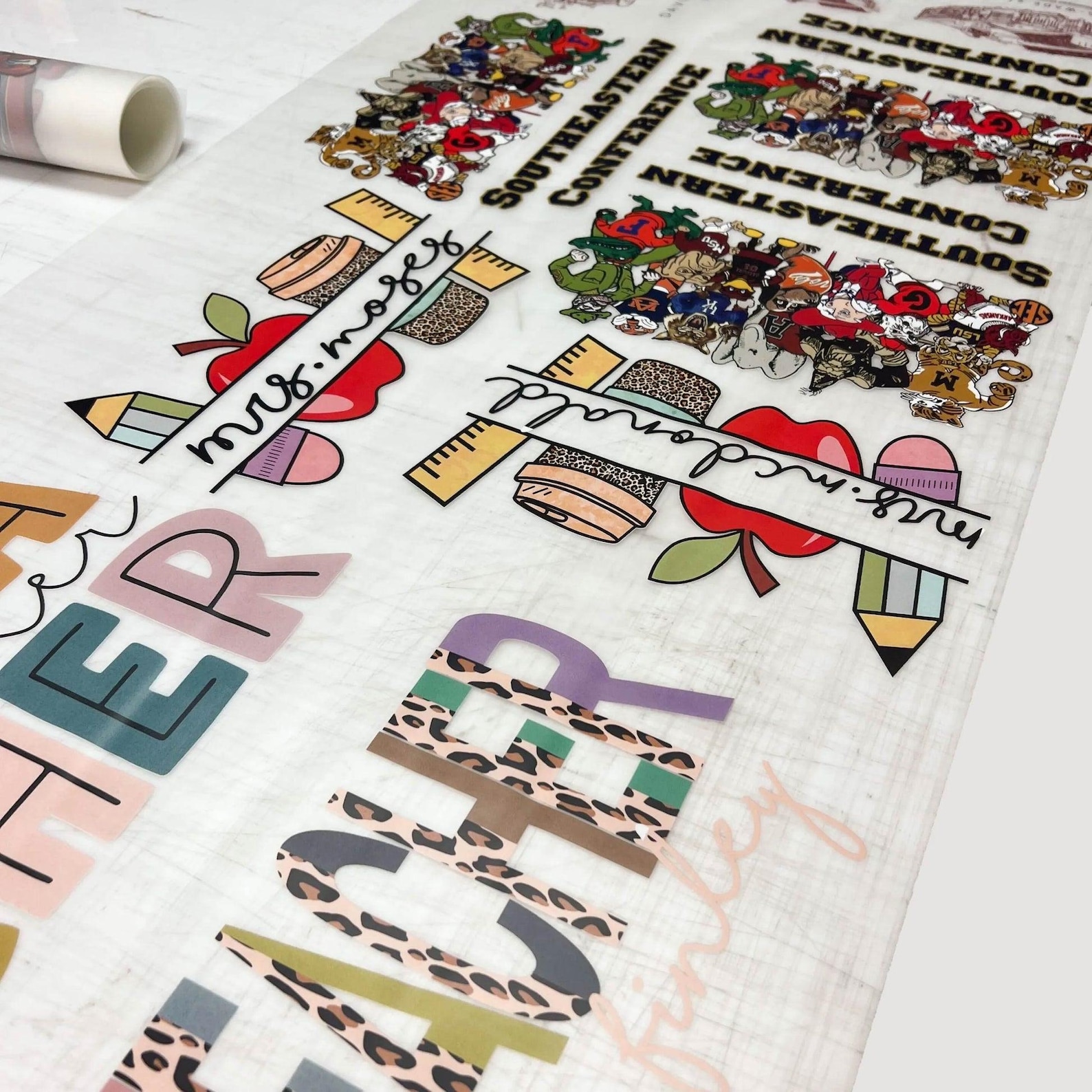
Direct-to-Film (DTF) printing involves printing a design onto a special film, applying a hot-melt adhesive powder, and then heat-pressing it onto fabric. The result is a vibrant, flexible print that adheres to almost any material — cotton, polyester, nylon, leather, and more.
What Is Screen Printing?
Screen printing uses stencils and ink pushed through a mesh screen onto fabric. It produces very durable prints, but requires a separate screen for each color, making setup expensive for small batches.
Key Differences
- Minimums: Screen printing requires large orders (typically 24-48 pieces) to be cost-effective. DTF has no minimums.
- Color complexity: DTF handles unlimited colors and gradients at no extra cost. Screen printing charges per color.
- Setup time: DTF is ready in minutes. Screen printing requires 1-3 days of screen preparation.
- Durability: Both are wash-resistant. DTF holds up 50-100+ washes when applied correctly.
Bottom Line
For small batches, full-color designs, or fast turnaround — DTF wins. For large, single-color runs — screen printing may be more economical. Most growing print businesses use both methods depending on the job.